Breast Screenings
When breast cancer is in the localized stage and detected early, the 5-year relative survival rate is 99%, according to the American Cancer Society. Women ages 20 and up should start a clinical breast exam every 1-3 years and do self-exams at home each month.
Deaconess Breast Services provides trailblazing diagnostic and treatment services, including 3D digital mammography with same day appointments.
Online Scheduling for Screening Mammograms
Schedule Now >
Breast Self-Exam
What Is Breast Self-Exam?
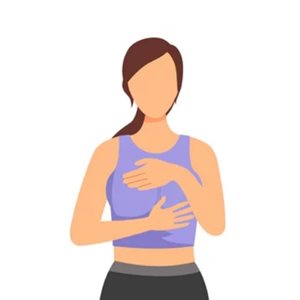 A vital early detection tool, breast self-exam involves a combination of physical and visual examinations of the breasts to look for signs and symptoms of breast cancer. The self-examination's purpose is to become familiar with the way the breasts look and feel normally. This breast self-awareness can help identify abnormalities and changes in your breasts, including lumps or skin changes. You could contact your doctor right away to report any changes discovered during a breast self-exam.
A breast self-exam is important for the early detection of breast cancer, but it should not take the place of clinical breast exams and regular mammograms.
How Often Should I Perform a Breast Self-Exam?
Women ages 20 and older are encouraged to perform breast self-exams at least once a month.
For women still menstruating, the self-exam is recommended a few days after the menstrual period ends. After menopause, it is recommended a breast self-exam be performed on the same day of each month.
Mammograms can help detect cancer before you can feel a lump, while breast self-exams help you to be familiar with how your breasts normally look and feel. Contact your health care provider if you detect any changes in your breasts, including any lumps, sore spots, changes in the skin, or nipple discharge.
How to Perform A Breast Self-Exam
Instructions from the National Breast Cancer Foundation
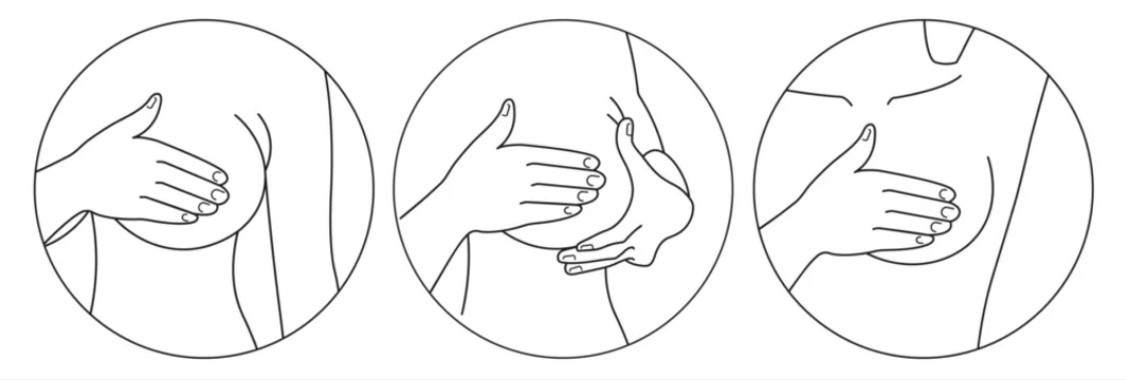
1) In the Shower
Using the pads/flats of your 3 middle fingers, examine the entire breast and armpit area, pressing down with light, medium, and firm pressure. Check both breasts monthly, checking for any new lumps, thickenings, hardened knots, or any other changes.
2) In Front of a Mirror
With both arms at your sides, visually examine your breasts, looking for any changes in the shape or contour of the breasts, any swelling, dimpling, or other skin irregularities on or around the breasts, or any changes in the nipples.
Then, flex your chest muscles by resting your palms on your hips and pressing firmly. Look for any puckering, dimpling or other changes, especially on one side. The left and right breasts will not match exactly; few women’s breasts are perfectly symmetrical.
3) Lying Down
While lying down, breast tissue spreads out evenly along the chest wall. Place a pillow under your right shoulder and put your right arm behind your head. With your left hand, move the pads of your 3 middle fingers around your right breast, covering the entire breast area and armpit.
Use light, medium, and firm pressure to feel for any new lumps, hardened knots, thickenings or any other breast changes. Squeeze the nipple to check for discharge. Repeat these steps for your left breast.
If I Perform Breast Self-Exams, do I need a Mammogram?
Mammography can usually detect tumors before they can be felt, so screening is key for early detection. However, when combined with regular medical care and mammography, self-exams can help women know what is normal for their breasts so they can report any changes to their physician.
If you discover a lump or other irregularity, schedule an appointment with your health care provider, but don’t panic; 8 out of 10 lumps are not cancerous.
Risk Factors You can Control
- Alcohol: If you consume one alcoholic drink a day, you are at a slightly increased risk for breast cancer. If you consume two to five alcoholic drinks a day, you are at 1 1/2 times the risk.
- Birth control pills: You are at a slightly higher risk of breast cancer if you are using birth control pills. If you stopped using the pills more than 10 years ago, you have no increased risk.
- Breastfeeding: Breastfeeding will slightly lower your breast cancer risk, especially if it lasts a total of two years.
- Weight: Following menopause, carrying excess weight can put you at a slightly higher risk for breast cancer. This is especially true if your extra weight is in the waist, and if you gained the weight in adulthood.
- Exercise: If you exercised as a youth, you may have a life-long reduced risk of breast cancer. If you exercise even a small amount as an adult, you lower your risk.
- Hormone replacement therapy: If you’ve used hormone replacement therapy for relief of menopause symptoms for more than five years, you’re at a slightly increased risk of breast cancer. If you stopped hormone replacement therapy five or more years ago, your risk is reduced.
Risk Factors You Cannot Control
- Age: Your chance of developing breast cancer goes up as you age.
- Family history: Your risk for breast cancer is higher if you have blood relatives who have had the disease.
- Genetic factors: If you have inherited a mutated gene from either parent, you are more likely to get breast cancer.
- Menstrual periods: If you began having your periods before the age of 12 or went through menopause after 55, you have a slightly increased risk of breast cancer. If you have not had children or had your first child after the age of 30, you are at a slightly increased risk.
- Personal history: If you have cancer in one breast, you have a greater chance of getting it in the other or in another part of the same breast.
- Race: If you are Caucasian, you are more likely to develop breast cancer than if you are African American. If you are Asian, Hispanic or American Indian, your risk is lower.